Sunday, 23 August 2015

Neotropical Birding 17 is out!

Neotropical Birding 17 is printed and has been available at the UK Birdfair since Friday. I was there today and enjoyed seeing the Neotropical Bird Club stand. This issue has been assembled in record time – six weeks – but is nevertheless one of the most satisfying numbers I have put together. Photos of what will now be recognised as a "new" species of owl for North America (Strix sartorii), the article on Sierra de Perijá and the nice image of PterodromaStercorarius interspecific social dominance mimicry (ISDM) are my highlights. I had some really nice unsolicited comments from people at the Birdfair - thank you all! 

Welcome to issue 17 of Neotropical Birding! 


You've heard of Africa's Big Five and Big Seven, but the average birder prefers the Big Six. Where in the world? Of course, it's the Paraguayan Chaco. Our veteran ornithologists Paul Smith and Rob Clay take us on a tour that targets the Chaco Big Six – figuratively, although they will literally be taking a group there on one of our regular NBC Fundraising tours later this year. They might even throw in a couple of extras that could one day make a Paraguayan Big Eight!

For a break from the heat, try some Andean birding in the isolated mountain range of Perijá on the Colombia-Venezuela border. This little-visited and relatively neglected range has been explored with some difficulty from the Venezuelan side, resulting in some remarkable discoveries in recent years. Travelling to the Colombian side, Trevor Ellery takes us to ProAves' newly-established Chamicero del Perijá (Perija Thistletail) Reserve. The lodge gives access to birds that were the stuff of dreams about only three or four years ago, including what will almost certainly be recognised as an endemic “Rufous” Antpitta, Grallaria (rufula) saltuensis, as well as the eponymous thistletail.

The second of our Birding Sites is the Río Bigal Biological Reserve in eastern Ecuador, a favourite of Juan Freile, Vincent Mouret and Mathieu Siol. Nestled in the Andean foothills, the reserve enjoys the best of both worlds, with a heady avifaunal mix of Amazonian and Andean species – and some really special birds characteristic of these elevations like the poorly-known, but stunning Pink-throated Brilliant Heliodoxa gularis.

In our last issue, Steve Howell examined Markham's Storm Petrel identification at sea. This time Fabrice Schmitt dispenses with the dramamine and takes us to recently-discovered Markham's Storm Petrel breeding colonies in the Atacama Desert of northern Chile. The nest sites of Ringed Storm Petrel remain a mystery – but for how long?

Sticking with seabirds, Alex Lees, Fabio Olmos and Alberto Campos go pelagic birding off the coast of NE Brazil. Their targets? Trindade Petrel Pterodroma arminjoniana tops a list that could include just about anything. Their article includes quite a few species for which there are only a handful of Brazilian records.

But if a handful of records is not exclusive enough, and you have a penchant for those really elusive birds, then they do not come much more enigmatic than Mexico's mystery Cinereous Owl Strix (“varia”) sartorii. Birding at the Cutting Edge, Nathan Pieplow and Andrew Spencer present the first photographs and sonograms, and tell us all about one of the most exciting encounters in North American birding for some time.

Our Globally Threatened Bird, the Colombian endemic Chestnut-capped Piha Lipaugus weberi, was only discovered in 1999 and is already Endangered – perhaps even Critically Endangered. This reinforces an idea that crops up with alarming regularity in Neotropical Birding: species becoming extinct even before we know them.

Alex Lees' invites you to “Get your lists out!” one last time for his final thoughts on Splits, lumps and shuffles. This is the column that turns everyone into an armchair taxonomist, providing fuel for arguments over the sanity of the AOU or IOC, Clements or HBW / BirdLife. Birdwise, it's the usual suspects once again: Pyrrhura parakeets, woodcreepers and Splitalopus. But should you have been paying more attention to those Grey-necked Wood Rails and Red-crowned Ant Tanagers – a probable future armchair tick or two for anyone who has been to both Central and South America?

As ever, Jez Bird brings us his regular NBC Conservation Awards Update. NBC continues to finance vital projects to conserve Neotropical Birds. Please join the Club if you would like to support our valuable work.

And finally, I would like to thank all our contributors, many of whom supplied unique material to meet a very tight schedule, writing articles, answering requests and sending photographs directly from the field. Thank you for sparing the time to make NB17 possible. I owe a special debt of gratitude to those who provide first class text and images for every issue, helping us unconditionally – you know who you are, and our readers do too!

Happy Neotropical birding!

Christopher J. Sharpe, Senior Editor


Neotropical Birding 17: contents


Sharpe, C. J. (2015) Welcome to issue 17 of Neotropical Birding. Neotrop. Birding 17: 2–3.

Schmitt, F., Barros, R. & Norambuena, H. (2015) Markham’s Storm Petrel breeding colonies discovered in Chile. Neotrop. Birding 17: 5–10. [Oceanodroma markhami, Oceanodroma hornbyi, Oceanites gracilis] E-mail: fabrschmitt at yahoo dot com

Lees, A. C., Olmos, F. & Campos, A. (2015) Here be gadflies: pelagic birding off north-east Brazil. Neotrop. Birding 17: 11–18. [Pterodroma arminjoniana, Calonectris
borealis, Oceanodroma leucorhoa, Stercorarius pomarinus; nice image of PterodromaStercorarius interspecific social dominance mimicry (ISDM)] E-mail: alexanderlees at btopenworld dot com

Lees, A. C. (2015) Splits, lumps and shuffles. Neotrop. Birding 17: 19–27. [resume of recent publications on taxonomy and systematics concerning multiple taxa] E-mail: alexanderlees at btopenworld dot com

Sharpe, C. J. (2015) Chestnut-capped Piha Lipaugus weberi. Neotrop. Birding 17: 28–31. E-mail: sharpebirder at gmail dot com

Pieplow, N. & Spencer, A. (2015) Finding Mexico’s mystery owl—Cinereous Owl Strix (varia?) sartorii. Neotrop. Birding 17: 34–39. [Strix sartorii, Strix varia, Strix fulvescens] E-mail: npieplow at gmail dot com

Smith, P. & Clay, R. P. (2015) Birding the Paraguayan Dry Chaco—The Big Six. Neotrop. Birding 17: 40–46. [Eudromia formosa, Chunga burmeisteri, Dryocopus schulzi, Strix chacoensis, Spiziapteryx circumcincta, Rhinocrypta lanceolata] E-mail: faunaparaguay at gmail dot com

Freile, J.F., Mouret, V. & Siol, M. (2015) Amidst a crowd of birds: Birding Río Bigal, Ecuador. Neotrop. Birding 17: 47–55. [E Andean Ecuadorian foothill specialities, e.g. Heliodoxa gularis] E-mail: jfreileo at yahoo dot com

Ellery, T. (2015) The Serranía del Perijá—an exciting new destination in Colombia. Neotrop. Birding 17: 58–67. [Perijá endemic taxa, e.g. Metallura iracunda, Metallura tyrianthina districta, Coeligena (bonapartei) consita, Grallaria ("rufula") saltuensis, Scytalopus perijanus, Asthenes gularis, Synallaxis unirufa munoztebari, Anisognathus lacrymosus pallididorsalis, Arremon perijanus, Atlapetes (latinuchus) nigrifrons] E-mail: trevor_lotan at hotmail dot com

Jeffers, R. (2015) Club news. Forthcoming NBC fundraising tours. Neotrop. Birding 17: 70. 

Bird, J. (2015) NBC Conservation Awards update. Neotrop. Birding 17: 71–74. [Vultur gryphus, Pyrrhura griseipectus] E-mail: jezbird at gmail dot com

Sunday, 16 August 2015

Hay-making on Chapel Green, Rocklands

Before...
Today we made our main annual cut of the Chapel Green hay meadow in Rocklands. For the past several years, this small (c. 0·01 ha) recovered grassland has been managed as a wildflower meadow. Since I was a boy, such meadows have all but disappeared from the United Kingdom, many of them being ploughed up, converted to pasture or built on; in all, 97% of our meadows have been lost since World War II and it is now our most endangered type of vegetation. As in many other matters, Rocklands has bucked the trend and our modest patch of flower-rich grassland has been improving in quality even in the short five years that we have lived here. Chapel Green is an asset of which the village can be justifiably proud.

Common Blue Polyommatus icarus
Traditional meadows grow on soils which have been impoverished by many years of grazing, which constantly removes nutrients from the soil. A regime of late-summer cutting, just after the flowers have set seed, and subsequent removal of the hay keeps nutrients low and enables the more interesting and less widespread plants to flourish. From the nodding heads of Cowslips Primula veris that herald the spring, through the June carpet of yellow Bird's-foot Trefoil Lotus corniculatus and Yellow Rattle Rhinanthus minor to late summer Meadowsweet Filipendula ulmaria, there is always something in bloom. The purple spikes of Knapweed Centaurea nigra and yellow discs of Fleabane Pulicaria dysenterica attract butterflies which add to the palette: we have over a dozen species, and resident colonies of Essex Skipper Thymelicus lineola, Common Blue Polyommatus icarus and gaudy Six-spot Burnet Zygaena filipendulae moths. A careful observer might find the curious Bee Orchid Ophrys apifera – no longer a common plant and seven of which flowered in 2014 – or Common Spotted-orchid Dactylorhiza fuchsii, the first spike of which appeared this summer. In all, the green is home to fifty species of flowering plants. Insects and seeds attract the birds, and Swallows and Swifts skim over the grass, Goldfinches worry the seedheads and owls hope for a vole – Barn, Tawny and Little Owls all visit. The population of Field Voles reaches such levels that on the 2013 cut the fleeing mammals were almost biblical in proportions. Chapel Green's pond is home to Great Crested Newts Triturus cristatus, Grass Snakes Natrix natrix and several types of dragonfly. Kingfishers check in from time to time; our first, bitterly cold winter a Snipe huddled in our drainage ditch, while last year a Sedge Warbler established its territory in the tall Great Willowherb Epilobium hirsutum and Reedmace Typha latifolia at the water margin.

After the cut, we will wait for the aftermath to emerge, close-cut perhaps two or three times more and then let the meadow settle down for the winter. All we need to maintain this rich and diverse meadow is to continue the regime of late-summer cuts, remove the resulting hay, and ensure that cars do not park on the area in winter; nature will do the rest. Let's enjoy this wonderful asset to our village.
Finest quality hay, waiting to be bagged and removed

Saturday, 27 June 2015

Six-spot Burnets emerge on Chapel Green, Rocklands

The most favourable day for insects so far this year: a mostly sunny morning, with temperatures pulling above 22°C by midday. Over the last weeks or so, Six-spot Burnet Zygaena filipendulae caterpillars have been leaving off feeding on the Bird's Foot Trefoil Lotus corniculatus to climb up the stems of taller grasses to pupate. Today there were several caterpillars, three pupae and the first adult of the year.


The Common Knapweed Centaurea nigra has just come into flower and, in addition to the burnets, there were single of several species of butterfly: Essex Skipper Thymelicus lineola, Large Skipper Ochlodes sylvanus, Meadow Brown Maniola jurtina and Small Tortoishell Aglais urticae.


Large Skipper Ochlodes sylvanus


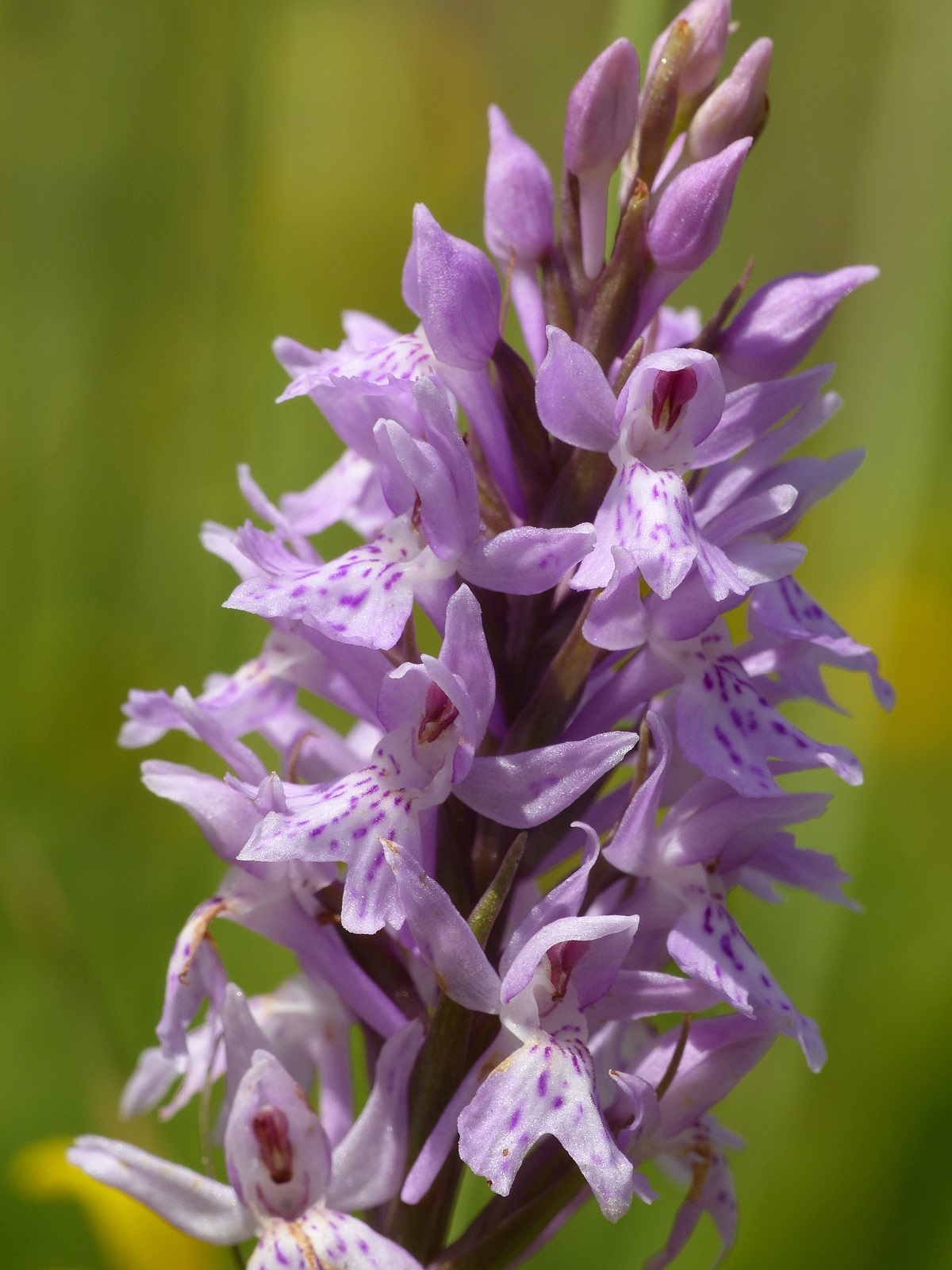
After seven spikes in 2014, the Bee Orchids are absent this year. However, a Common Spotted Orchid Dactylorhiza fuchsii - a new species for the green - compensates.


Common Spotted Orchid Dactylorhiza fuchsii


Thursday, 18 June 2015

Neotropical Birding 16 is being distrbuted

Our Spring issue is a little tardy this year to match the lateness of the season...

Welcome to issue 16 of Neotropical Birding! 


We're straight into the thick of it in this issue with Alex Lees' regular Splits, lumps and shuffles column, which once again trawls the murky depths of Neotropical systematics and taxonomy. This issue includes a sobering image of two recently-described and likely extinct Brazilian furnariids. How many taxa are we losing before we have time to catalogue them?

Fortunately, our Globally Threatened Bird, the Endangered Speckle-chested Piculet Picumnus steindachneri looks set to escape their fate and may turn out to be more widespread than previously suspected. Woodpecker nut Gerard Gorman has photographs.

Our first Identification Workshop focusses on at-sea Identification of Black and Markham’s Storm Petrels. The latter is a Data Deficient species, the conservation status of which is confounded by identification challenges. Its true status is only just becoming clear and happily it may turn out to be of minor conservation concern. Steve Howell is our guide, and provides our cover photo of the coveted Markham’s Storm Petrel. A very different identification pitfall is the result of pollen staining, as illustrated by mysterious Euphonias in French Guiana.

The LSU team that achieved last year's Peru Big Day record provide a blow-by-blow account of what it is like to be Birding at the Cutting Edge.

Our compilation of recent published and unpublished records, Neotropical Notebook, is collated for the last time by Guy Kirwan. His team of collaborators are Dušan Brinkhuizen, Diego Calderón, Bradley Davis and Jeremy Minns.

NBC continues to raise money to finance projects that conserve Neotropical Birds. Jez Bird tells us about this year's award winners and the continuing benefits of projects financed in the past in NBC Conservation Awards Update. Your contribution to NBC helps Award recipients give something back to the Neotropical birds we all enjoy.

We round off the issue with a Book Review of one of the most exciting bird books of the past year: the first volume of the HBW and BirdLife International Illustrated Checklist of the Birds of the World.


Happy Neotropical birding!

Christopher J. Sharpe, Senior Editor


Neotropical Birding 16: contents


Sharpe, C. J. (2015) Welcome to issue 16 of Neotropical Birding. Neotrop. Birding 16: 2.

Lees, A. C. (2015) Splits, lumps and shuffles. Neotrop. Birding 16: 4–15. [resume of recent publications on taxonomy and systematics concerning multiple taxa] E-mail: alexanderlees at btopenworld dot com

Gorman, G. & Sharpe, C. J. (2015) Speckle-chested Piculet Picumnus steindachneri. Neotrop. Birding 16: 18–21. E-mail: gerard at probirder dot com

Howell, S. N. G. (2015) Identification of Black and Markham’s Storm Petrels off Peru. Neotrop. Birding 16: 22–26. [Halocyptena (= Oceanodroma) melania, Oceanodroma markhami].

Deville, T., Pelletier, V., Claessens, O. & Ingels, J. (2015) Euphonias using pollen make-up: an identification pitfall. Neotrop. Birding 16: 27–31. [Euphonia minuta, Leiothlypis peregrina] E-mail: tanguy.deville at gmail dot com

Seeholzer, G., Harvey, M., Lane, D. & Angulo, F. (2015) LSU Peru Big Day 2014. Neotrop. Birding 16: 33–42. [specialities of Alto Mayo region, NE Peru] E-mail: seeholzer.glenn at gmail dot com

Kirwan, G. M., Brinkhuizen, D., Calderón, D., Davis, B. & Minns, J. (2015) Neotropical Notebook: published and unpublished records. Neotrop. Birding 16: 43–62. [resume of recent records concerning multiple taxa] E-mail: gmkirwan at aol dot com

Bird, J. (2015) NBC Conservation Awards update. Neotrop. Birding 16: 63–67. [Amazona
vinacea, A. oratrix
] E-mail: jezbird at gmail dot com

Sharpe, C. J. (2015) Book review: HBW and BirdLife International Illustrated
Checklist of the Birds of the World. Volume 1. Neotrop. Birding 16: 68–69. E-mail: neotropical.birding at neotropicalbirdclub dot org html PDF


Sunday, 7 June 2015

Norfolk moths: Rockland St. Peter garden, 6 June 2015


After a relatively warm (18°C) and intermittently sunny day, completely clear skies all night, with temperatures of 13.0°C when I turned on the MV light at 21h45 and 9.7°C when I turned it off at 04h00. A light ESE air. Waning gibbous moon.

It took me half an hour to record the catch. A May Highflyer had settled just below the light, while a Privet Hawk-moth was resting on cut branches alongside the trap.


Macro-moths (23 moths of 12 spp.):-

Colostygia pectinataria Green Carpet 2
Hydriomena impluviata May Highflyer 1
Sphinx ligustri Privet Hawk-moth 1
Calliteara pudibunda Pale Tussock 1
Spilosoma lubricipeda White Ermine 3
Agrotis exclamationis Heart and Dart 5
Xestia c-nigrum Setaceous Hebrew Character 1
Discestra trifolii Nutmeg 1
Rusina ferruginea Brown Rustic 1
Oligia strigilis agg. Marbled Minor agg. 1
Charanyca trigrammica Treble Lines 5
Diachrysia chrysitis Burnished Brass 1

Sunday, 24 May 2015

Norfolk moths: Rockland St. Peter garden, 23 May 2015

Lychnis Hadena bicruris
It has been a cold spring, particularly compared to the glorious balmy season last year, so I have not felt too bad about not having time to dust off the Skinner trap. I confess that feeling the temperature plunge towards the end of the afternoon was the deciding factor in putting out the trap: I knew that it would not take long to process the small catch. After a warm (18°C) and partly sunny day, skies remained largely clear for most of the night, with temperatures of 12.0°C when I turned on the MV light at 21h30 and 6.5°C when I turned it off at 04h00. A light S air brought with it more than a hint of damp. The waxing crescent moon quickly set, with the new moon having been on 18 May. A Robin and a Blackbird arrived at the trap at 04h10, but there was nothing for them outside the trap.

As suspected, the catch was meagre, but not without interest. A newly-emerged Chocolate-tip was very smart indeed. Lychnis is new for the site and the appearance of three of them coincides with the flowering of Ragged-Robin Lychnis flos-cuculi on the adjacent Chapel Green. Moths of the genus Hadena are specialised to feed on plants of the campion family (Caryophyllaceae), of which Ragged-Robin is a member, but at no small cost to the plant, since the larva can devour much of the seed production. While Red Silene dioica and White Campion S. latifolia seed pods are the favoured food of Lychnis caterpillars, and the adult moths target the nectar of their host-plants, I like to imagine the adults visiting the night-blooming Ragged-Robin that is flowering in profusion next door. At least this would vindicate the name.

Light Brocade is a local moth that I caught at about this time last year.


Macro-moths (11 moths of 7 spp.):-

Clostera curtula Chocolate-tip 1
Diaphora mendica Muslin Moth 3
Agrotis exclamationis Heart and Dart 1
Lacanobia w-latinum Light Brocade 1
Hadena bicruris Lychnis 3
Charanyca trigrammica Treble Lines 1
Abrostola tripartita Spectacle 1


Saturday, 14 March 2015

First Chiffchaff of the year and Willow Tit at Thompson Water

Singing Chiffchaff Phylloscopus collybita
A quick lunchtime picnic at Thompson Water was rewarded with the first Chiffchaffs Phylloscopus collybita of the year: at least three or four males singing and chasing around the anglers' area. An unfamiliar song, reminiscent of that of several antbirds – a rather deliberate three second series of downslurred pure-tone notes repeated seven or eight times on same pitch: piu-piu-piu-piu-piu-piu-piu-piu – proved to be a Willow Tit Parus montanus. This bird showed a well-marked pale secondary panel.