Showing posts with label insects. Show all posts

Friday, 30 October 2020

Europe's Dragonflies: A field guide to the damselflies and dragonflies

Europe's Dragonflies: A field guide to the damselflies and dragonflies 

 
Dave Smallshire & Andy Swash
Princeton University Press WILDGuides | 2020
360 pp. | 15 x 21 cm 
Paperback | £25 / $ 29.95 | ISBN: 9780691168951
 
Few groups illustrate as clearly as dragonflies the enormous advances in field guide technology over the past few decades. I became interested in the Odonata at a local nature reserve at age 11, and having read the school library’s copy of Collins New Naturalist Dragonflies from cover to cover I soon needed something to help me identify the species I encountered. At that time, the only identification guide available to me —and in a new edition on sale in the coveted natural history corner of Austicks Bookshop— was the slim, A4-sized volume by Harley Books. At £16.95 it was fabulously expensive, but my 1984 school Physics prize put it within reach and I spent the next few weeks bubbling with the anticipation of actually receiving it from the headmaster. As I carefully scrutinised its pages over and over again, it did not seem as if identification literature could ever get better than its sumptuous super-life-size full-colour plates, technical keys to both adults and larvae, and impressive 10 km square National Grid maps. The excitement was tempered slightly by the fact that I could now see starkly that I was apparently never going to be able to find many more species this far north in Yorkshire: most British dragonflies were limited to the balmy climes south of the Humber. 

The evolution of dragonfly guides...
I still have enormous affection for that identification guide, and great respect for its author, who —like so many great naturalists— was not a professional, but a north London schoolmaster, and I still take it off the shelves to learn its insight into the species that I find. But times have changed for those wishing to identify dragonflies. On one hand the number of potential species has increased as dragonflies expand their ranges, moving northwards to colonise the British Isles, and on the other the identification literature has vastly improved to more than keep pace with new challenges. The illustrations of Richard Lewington have greatly facilitated the amateur identification of several once arcane insect groups and collaborations with Steve Brooks in 1997 and Klaas-Douwe Dijkstra in 2006 produced ground-breaking guides to British and European dragonflies respectively. Both are a pleasure to use. The former has run to three editions while a second edition of the latter is in press as I write. On a different tack, the WILDGuides team employed their trademark photographic approach to produce a complementary guide to Britain’s dragonflies in 2004; the 2014 third edition is excellent, a resource that I use alongside Brooks & Lewington. So it is perhaps no surprise that WILDGuides have taken the logical step to publishing a photographic guide to the wider region of Europe. There has been no better time to get out and explore the European dragonfly fauna.

The new guide has all the hallmarks we have come to expect from WILDGuides publications. It is portable, robust, oriented at field identification by amateurs as well as professionals, visually intuitive, and makes use of the highest quality photographic images skilfully manipulated by design wizard Rob Still. As with other titles in the series, it also includes introductions to the identification of particular subgroups and plenty of comparative plates and text to facilitate correct identification, thus guiding the user in the process of identification. This use of ‘visual keys’ is one of the strengths of the book, and the series as a whole.

This guide covers all 140 of Europe’s species. Apart from the keys and comparative plates, each species receives a full double-spread account comprising three to ten or more photographs and facing text set against the background image of a typical habitat. There are 1400 photographs in all. The text is concise and very easy to navigate. Abundance and seasonality data are placed adjacent to range maps to facilitate the rapid narrowing-down of options, while the main body of text focuses on identification, behaviour and breeding habitat. A short list of similar species (with respective page numbers) is shown at the bottom left of each species account.

Distribution maps are based on the 2015 Atlas of the European dragonflies and damselflies. Each is printed at a scale (43 x 34 mm) that allows just sufficient resolution to determine whether or not the species is likely to be encountered at a given location. Interestingly, since I received my school prize field guide a dozen new (mostly) continental species have been recorded in the UK, half of them (Chalcolestes viridis, Lestes barbarus, Coenagrion scitulum [recolonising], Erythromma viridulum, Anax parthenope, A. ephippiger) becoming established, having bred or at least recorded egg-laying. Others, like Aeshna mixta, was, as its name Migrant Hawker suggests, largely an immigrant only just beginning to breed in the UK, but is now a common resident throughout most of England. The still more southerly A. affinis, a rare vagrant when I was at school, has subsequently expanded its European range several hundred kilometres polewards and has now also bred in the UK, something that will make its English name of Southern Migrant Hawker redundant. In fact, many species have expanded their range north and westwards in response to a warming climate. And one thought to be extirpated in my school days, Lestes dryas, has been rediscovered, within a few kilometres of my current home.

As ever with WILDGuides publications, the book has been issued in association with a relevant conservation organisation, in this case the British Dragonfly Society, and there is a strong emphasis on conservation throughout, including details of IUCN Red List status for each species in a handy checklist located at the end of the book.

This book is almost self-recommending. Anyone with an interest in the dragonflies of the region will want a copy. Even for those who limit their travels to the UK —virtually all of us at present— this guide will provide vital context and also some handy identification tips. I am very glad to have this book on my shelves and wish a copy had been available to help me with the challenges of exploring the Iberian Odonata. At the same time, I look forward to the publication of the second edition of Dijkstra & Lewington’s wonderful guide. The two should complement each other perfectly.
 
___________________


Accessible, easy-to-understand introductory material.


A wealth of information packed into concise, image-rich content in a careful layout designed to provide the most helpful cues along the quickest and easiest route to identification.


'Visual keys' to the trickiest groups making full use of painstakingly selected images supplemented with identification pointers.


One of several critical comparison plates.

Detail of a particularly useful comparison plate depicting lateral views of flying Aeshna males. 


Checklist of European Odonata.


References 
 
Askew, R.R. (2004) The dragonflies of Europe. 2nd edition. Harley, Colchester. 
 
Brooks, S. & Lewington, R. (1997) Field guide to the dragonflies and damselflies of Great Britain and Ireland. British Wildlife Publishing, Dorset. 
 
Corbet, P.S., Longfield, C. & Moore, N.W. (1960) Dragonflies. Collins (New Naturalist No. 41), London. 
 
Dijkstra, K-D.B. & Lewington, R. (2006) Field guide to the dragonflies of Britain and Europe. British Wildlife Publishing, Dorset. 
 
Galliani, C., Scherini, R. & Piglia, A. (2017) Dragonflies and damselflies of Europe. A scientific approach to the identification of European Odonata without capture. World Biodiversity Association (WBA Handbooks No. 7), Verona. 
 
Hammond, C.O. & Merritt, R. (1983) The dragonflies of Great Britain and Ireland. 2nd edition. Harley, Colchester. 
 
Kalkman, V.J. & Boudot, J-P. (2015) Atlas of the European dragonflies and damselflies. KNNV, Netherlands. 
 
Smallshire, D. & Swash, A. (2014) Britain’s dragonflies: A field guide to the damselflies and dragonflies of Britain and Ireland. 3rd edition. Princeton WILDGuides, Hampshire.

Monday, 10 June 2019

Ghost Moth lek on Rocklands' Chapel Green

Ghost Moths Hepialus humuli are one of the few British moths that have entered popular culture and are—or used to be—generally known to the non-specialist.  In earlier times, when insects were more abundant, meadows more commonplace, street lighting less widespread, and people abroad in the gloaming, an encounter with this species would have been a frequent early summer occurrence. Frequent but nevertheless remarkable. The memorable sight of a dozen or more large white moths hovering over the grass tops as if tethered to a thread in the fading light doubtless gave rise to their name.

Today this sight is considerably less familiar. In fact, unless they make a special effort, even moth-ers have rarely seen it. So when keen moth-man and wildlife writer James Lowen asked if anyone in East Anglia knew of a lek to cover in his forthcoming book, I racked my brains and suggested the two places that I had seen male moths in recent years: Old Buckenham village green and Chapel Green, Rocklands. This latter is a tiny plot of wildlife meadow that was restored by Rocklands Parish Council two decades ago through a Millenium Meadows grant, and financial support from Norfolk Rural Community Council, Norfolk County Council and guidance from Norfolk Wildlife Trust. It is a tiny (c. 0·015 ha) fragment of managed habitat that holds a surprisingly diverse and interesting flora and fauna, amongst which is a lek of Ghost Moths. I say lek, but when I checked back through my records I saw that I had only seen single males in June 2014, and (twice) in July 2016.

On D-Day, Thursday 6 June, despite a cool and windy evening, at 9.45 p.m.. I decided that I could no longer put off checking whether this year would produce an improvement on the singles that my memory had embellished into a weaving and bobbing troupe. I was fully prepared to tell James that the promised lek had not materialised and may have been unreliable in any case. What a relief to find two, then four, then finally a dozen male Ghost Moths "pendeculating" – Kettlewell's neologism for South's "swaying themselves to and fro without making progress".


The following evening, James was able to visit Chapel Green, arriving at 9.20 p.m. on his way back from another mothing assignment at Dungeness with moth expert Will Soar. For the first 20 minutes we enjoyed the meadow's wildflower display, twitching at passing Straw Dots Rivula sericealis and Common Swifts Korscheltellus lupulina (the latter a close relative of Ghost Moth) identified by Will. It was not until 9.40 p.m. that the first of our glowing white targets appeared, immediately followed by another, and another... Soon a group of six males were swaying and weaving on one side of the meadow, with another couple on the other. Our neighbour Carolyn, who coordinates the Chapel Green Management Committee, came out to enjoy the spectacle. We wondered if we might be lucky enough to see females, and shortly afterwards a dull yellowish brown female did indeed appear, immediately to mate with her chosen male. We found two pairs of mating moths, both on tall grass spikes, as well as a bloated female that was surely about to deposit her eggs. By 10.00 p.m. the display was over, and only these five Ghost Moths remained, clinging to their respective stems. The entire show had lasted exactly 20 minutes.


What is going on? A lek is an aggregation of male animals that come together, usually at a traditional site, to display together in order to compete for access to females. The phenomenon is especially well-documented in birds (particularly grouse and manakins) but not so widely-known in insects. In the case of Ghost Moths, the males hover over the grass, fanning their wings in order to release from scent brushes on the tarsus of the rear pair of legs a pheromone that attracts the females. The latter enter the lek briefly, select a mate, copulate on a grass stem and then fly off to drop their eggs over suitable grassy areas. The process was diligently observed and described by Mallet in his 1984 paper.

Formerly common, Ghost Moth is now a UK Biodiversity Action Plan species, listed because its populations are declining markedly. Conservation of this and a suite of other disappearing grassland plants and animals species is precisely the reason that Rocklands Parish Council manage this small area as a wildflower meadow.


More information?

Ghost Moth on NorfolkMoths here.

Rocklands Parish Council Chapel Green wildflower meadow page here.

Previous posts about management of Chapel Green wildflower meadow here.

James Lowen's blog here.


References

Kettlewell, H.B.D. (1973) The evolution of melanism. Clarendon Press: Oxford. 423 pp.

Mallet, J. (1984) Sex roles in the ghost moth Hepialus humuli (L.) and a review of mating in the Hepialidae (Lepidoptera). Zoological Journal of the Linnean Society 80(1): 67–82. PDF.

South, R. (1908) The moths of the British Isles, second series. Frederick Warne & Co.: London. 388 pp.


Updates

James Lowen's wonderfully illustrated account of tonight's display here.

On the evening of 11 June, despite cool temperatures (10°C), moderate drizzle and a damp SE 2–3 breeze, we counted at least 14 males lekking for exactly 20 minutes 2149–2209. The females are more difficult to spot, but we did see two come in and mate with males. The mild (15°C) evening of 17 June was even more active, with a high count for this year of at least 32 males and 4+ females between 2155 and 2215 (and perhaps later, as I left while it was still in full swing). A quick visit at 2210–2220 on the cool (14°C), evening of 22 June showed 24 males lekking, along with 1 female, though did not have time to check thoroughly.

Friday, 4 August 2017

Butterflies of the Pyrenees


Some of the butterflies encountered on a family camping trip to the Huesca Pyrenees in late July-early August.

[Text to follow. Some IDs tentative]


Pyrgus alveus centralhispaniae / P. armoricanus ?, Torla, 21 July

Argynnis pandora, Torla, 21 July
Apatura iris, Torla, 21 July

Parnassius apollo, río Ara above Bujaruelo, 22 July
Hesperia comma, Valle de Otal, 23 July
Lasiommata maera, Valle de Otal, 23 July
Polyommatus escheri ? , Valle de Otal, 23 July

Pyrgus sp. Valle de Otal, 23 July

Lysandra cordon, Valle de Otal, 23 July

Argynnis paphia, Valle de Otal, 23 July


Polyommatus escheri ? , Valle de Ordesa, 24 July


Plebicula dorylas ♀, río Ara above Bujaruelo, 25 July

Nymphalis antiopa, Lac d'Orédon, 29 July

Lycaena vigaureae, Lac d'Orédon, 29 July
Brassy Erebia sp cf gorgone, Ibón de Plan, 31 July

Ibón de Plan, 31 July


Melitaea phoebe occitanica & Zygaena filipendulae, Revilla, 1 Aug

Melanargia galathea, Revilla, 1 Aug


Iphiclides feisthamelii, Laguna de Pineta, 3 Aug


Saturday, 27 June 2015

Six-spot Burnets emerge on Chapel Green, Rocklands

The most favourable day for insects so far this year: a mostly sunny morning, with temperatures pulling above 22°C by midday. Over the last weeks or so, Six-spot Burnet Zygaena filipendulae caterpillars have been leaving off feeding on the Bird's Foot Trefoil Lotus corniculatus to climb up the stems of taller grasses to pupate. Today there were several caterpillars, three pupae and the first adult of the year.


The Common Knapweed Centaurea nigra has just come into flower and, in addition to the burnets, there were single of several species of butterfly: Essex Skipper Thymelicus lineola, Large Skipper Ochlodes sylvanus, Meadow Brown Maniola jurtina and Small Tortoishell Aglais urticae.


Large Skipper Ochlodes sylvanus


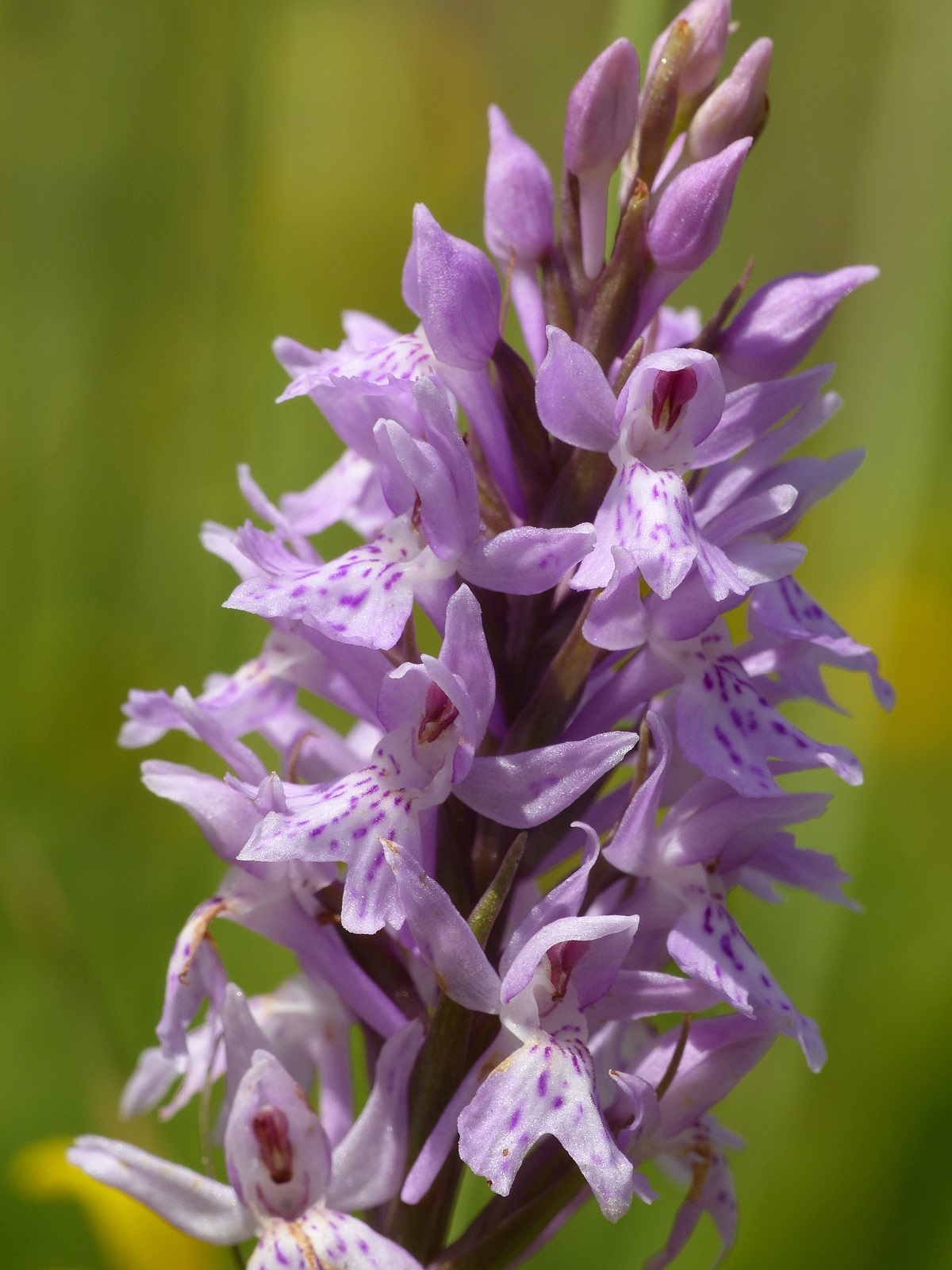
After seven spikes in 2014, the Bee Orchids are absent this year. However, a Common Spotted Orchid Dactylorhiza fuchsii - a new species for the green - compensates.


Common Spotted Orchid Dactylorhiza fuchsii


Sunday, 16 March 2014

Human Bot Fly Dermatobia hominis myiasis continued

This year my botfly larvae were not so simple to remove, particularly the one in my ankle, which caused enough swelling that my right foot no longer fit into a shoe. By Friday afternoon, after a failed attempt to expel it, I could no longer feel this larva moving about, and my ankle was becoming more swollen and discoloured. Fortunately, a kind doctor solved the problem by taking me to Norwich A&E today and surgically removing all the larvae. I was surprised to find that they were about half the size of those that I had successfully expelled in previous years, because they caused considerably more discomfort and inconvenience.

One of my 2nd instar Dermatobia hominis larvae. The breathing tube is on the left, mouthparts on the extreme right. Note the concentric rows of backward-pointing, decurved spines, which serve to anchor the larva in place.

Wednesday, 12 March 2014

Human Bot Fly Dermatobia hominis myiasis

It's been a couple of weeks since I hopped onto the Cessna Caravan at Chan Chich, and there's no doubt that once again I have brought back with me as souvenirs of Belize more than the usual couple of bottles of Marie Sharp's Fiery Hot Habanero Pepper Sauce.

I've picked up Human Bot Flies elsewhere, but Belize is a particularly good place to encounter Dermatobia hominis. Fortunately, I have always had them on my legs where they cause only minor discomfort and are relatively easily extracted: I have heard tales of scalp infestation and can well imagine that this would be a serious inconvenience. Indeed, in rare cases, larvae living in the scalp have burrowed through the soft fontanel and lodged in the brain, killing the host.

Bot flies are native to tropical America where they parasitise mammals such as deer, tapir, pigs, dogs and cattle, as well as Homo sapiens. I am not sure why they should be so common in Belize, since there are far more tapirs and cows in the Venezuelan llanos or the Brazilian Pantanal and I have never picked them up there. The larvae inhabit the subcutaneous layer of their hosts, where they form a pustule within which they feed on tissue fluids. Stiff, black, backward-pointing bristles anchor them in place as they scrape away with a pair of fang-like mandibles at the host tissue, while a breathing tube allows them to take up oxygen through a hole in the skin which opens after a couple of weeks. The larva is well adapted to its task. But the most extraordinary aspect of the bot fly's life cycle is its devious strategy for getting the larva into place. The adults capture a blood-sucking insect, such as a mosquito or deerfly, and deposit their mature eggs on the ventral side a behaviour known as phoresy. Upon the vector's contact with the mammalian skin, body warmth triggers the eggs to hatch and the newborn larva gains access to the host through the bite wound or a nearby hair follicle. The larvae spend about two months within their host, during which time they pass through several instars before crawling out to pupate in the soil. The University of Florida provides a good introduction to the Human Bot Fly.

What happens if you (or your family members) do not intend to allow the larval bot fly to complete its natural span within your body? Going to a medic in the USA or Europe will almost certainly result in minor surgery and perhaps counselling for the physician. As the US CDC stipulates, "Fly larvae need to be surgically removed by a medical professional". In fact, there's a much simpler solution: I prefer to sit it out until the larvae become uncomfortable and large enough to physically expel. From about the third instar onwards, mine have tended to move around and rasp away in the early hours, causing pain and lost sleep, so this is the time to get on with the task. The first time I had them, I tried taping bacon over the holes, then ham, then beef, but simply woke up night after night with a curious sort of "breakfast in bed". Much better is to apply a thick layer of petroleum jelly to the hole and wait a few hours. Starved of air, the larva will work their way out of their breathing hole and if you are quick you can deftly apply pressure to the surrounding skin and force the intruder out. Since by this time they are flask shaped, with the bulk of the body in the depths of the pustule, they typically pop out with some force not unlike a miniature champagne cork!

To be continued... here

Thursday, 26 September 2013

Tortoise beetle

The Chrsomelidae is a family of 35,000 species, often known as leaf beetles. It includes some brightly coloured, spotted or striped members, while the tropical species I am more familiar with can be conspicuously large and metallic green, blue or gold. The Cassidinae or tortoise beetles are easily recognised by their profile: this is clearly the group that inspired the Volkswagen Beetle. In South America, tortoise beetles are sometimes common and, being rather conspicuous, are frequently remarked upon by the visitor. They may show so much of a rim that they look like WWII British infantry helmets, or else be curiously humped or pock-marked.

I was reminded this afternoon that we have several species of tortoise beetle in the UK. Admittedly, at 6 mm long and mostly green, they may not be as striking as their South American counterparts - but they are recognisably built on the same pattern. Here is one that the kids brought in.


I had got as far as the genus Cassida before I stumbled upon Dave Hubble, organiser of the British Leaf and Seed Beetle Recording Scheme. He kindly looked at the photographs and asked for a shot of the underside - so now I know what I need next time! Still, I did enjoy perusing a fellow ecologist's wonderfully eclectic blog.


References

Hogue, C. L. (1993) Latin American Insects and Entomology. University of California Press, Berkeley. 536 pp.

Hubble, D. (2012) Keys to the Adults of Seed and Leaf Beetles of Britain and Ireland. FSC, Telford, UK. 136 pp.

Thursday, 22 August 2013

Book review: Britain's Hoverflies by Stuart Ball & Roger Morris

Britain's Hoverflies: An Introduction to the Hoverflies of Britain

Stuart Ball & Roger Morris
Princeton University Press WILDGuides | 2013
296 pp. | 15 x 21 cm | 569 colour photos. 161 colour distribution maps
Paperback | £24.95 / $35.00 | ISBN: 9780691156590

Only about 60% of the 280+ British species of hoverfly are readily identifiable by non-specialists (i.e. without recourse to a microscope and specimen), which goes some way to explaining why hoverflies have not been adopted by birders and nature enthusiasts with the same gusto as dragonflies, butterflies and macro moths. That may be about to change: this outstanding new field guide will almost certainly put hoverflies on the naturalist's radar.

Since 1983, Stubbs and Falk's British Hoverflies: An Illustrated Identification Guide has been the standard guide to British hoverflies. It is the definitive treatment, aimed at the specialist and very keen amateur and is now in its second edition. Size and cost have put it out of reach of the casual observer (like me), who instead relies on Gilbert's Hoverflies (in the Naturalists' Handbooks series) to tentatively name the commoner species.

WILDGuides' Britain's Hoverflies really fills a gap, giving the average naturalist a fighting chance of identifying the majority of species in the field. The book is the same size as previous WILDGuides publications, although more than twice as thick, so it is a true field guide. Its layout, with the plates facing the text, maps and figures makes it entirely fieldworthy – no need to flip back and forth in order to review all the information on a particular species. Following the format of previous WILDGuides, photographs are the main identification tool. A large proportion of the images were taken by Steven Falk – yes, the co-author of the standard work, illustrator of the old Gilbert handbook and administrator of an excellent hoverfly photograph website – and are perfectly engineered to show the field characters required to clinch identification. Often pointers and annotations are used to indicate key field characters. Since the authors are co-organisers of the Hoverfly Recording Scheme, we can be pretty confident of the identity of the subjects – something that cannot be said of some other books and Internet sources.

The facing-pages consist of snappy text which focusses on identification, similar species and observation tips (exactly what is required of a field guide, yet so often left out), together with a distribution map and indicator of flight season. The maps are excellent: large enough to allow the user to pinpoint a location and making use of colour to indicate abundance. The distributional data are derived from the Hoverfly Recording Scheme.

The combination of superb photographs, text and figures makes this one of the most effective identification guides I have used. On top of that, the introductory chapters are exemplary. Packed with fascinating information, even a cursory perusal is enough to make the reader want to get into the field and start using this guide.

In sum, this is one of the best field guides to any taxonomic group. I hope it will set the standard for photographic guides to come. How long before we have similar guides to grasshoppers and bush crickets, bees and wasps, ladybirds, pond life, or even mammals or fungi? All credit to the authors and to the WILDGuides team for giving us this vital new field guide.

References

Gilbert. F. (1993) Hoverflies (2nd edition). Naturalists' Handbooks # 5. Richmond Press: London. 72 pp.

Stubbs, A.E. & Falk, S.J. (2002) British hoverflies: an illustrated identification guide (2nd edition). British Entomological and Natural History Society: London. 469 pp.